 English
 Arabic



Cloud Computing Based Final Year Project
A Cloud Computing Project in modern engineering is far more than a simple coding assignment; it’s a practical demonstration of building and deploying scalable, on-demand applications using remote internet-based infrastructure. This shift mirrors the industry’s move away from costly local servers.
Every final year student needs Cloud platform exposure because it is the backbone of digital transformation across all sectors. This hands-on experience in the cloud distinguishes a graduate from their peers, proving they can handle real-world deployment challenges.
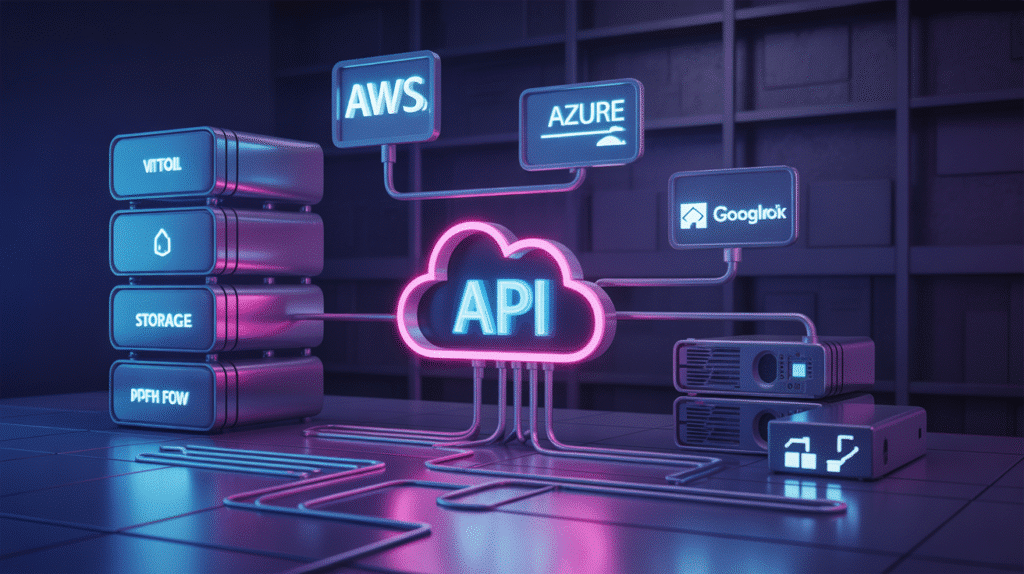
Major players like AWS (Amazon Web Services), Microsoft Azure, and Google Cloud dominate the public cloud space, each offering thousands of specialized services for computing, storage, and networking. Alongside these, private cloud environments are crucial for organizations with stringent security and compliance needs. Mastering these platforms is essential for a high-quality Cloud Computing Project.
The evolving need for cloud-based infrastructure in 2025 is driven by the explosive growth of AI, IoT, and Big Data. These technologies demand the elasticity, speed, and global reach only the cloud can provide. Completing a significant Cloud Computing Project fundamentally improves a student’s technical portfolio and employability by showcasing real-time skills in complex, distributed environments, making them immediately valuable to potential employers.
Essential Benefits of Selecting Cloud Computing for Final Year Projects
Industry Demand for Cloud Professionals
The growth of cloud jobs in India and the global market is exponential, consistently outstripping the supply of qualified talent. This demand is fueled by the continuous migration of business operations to the cloud.
The skills companies expect from freshers in 2025 are shifting from mere theoretical knowledge to proven practical competence. Hands-on experience with containerization (Docker, Kubernetes), serverless computing, and cloud security frameworks gained from a dedicated Cloud Computing Project is highly sought after.
Practical Learning Benefits
- Hands-on deployment: Moving beyond theory, students learn the practical intricacies of configuring, launching, and managing virtual resources, a skill central to any successful Cloud Computing Project.
- Scalable architecture: A cloud environment allows students to design applications that can effortlessly handle fluctuating user traffic, teaching the principles of elastic and cost-optimized resource scaling.
- Cost-efficient testing environment: Utilizing the cloud’s pay-as-you-go model lets students spin up powerful testing environments without massive hardware investment, making advanced testing accessible for their Cloud Computing Project.
How Cloud Projects Strengthen Academic Profile
- Helps in technical interviews: Candidates who can articulate the architecture and deployment challenges of their Cloud Computing Project on AWS or Azure demonstrate a maturity and depth of knowledge that impresses interviewers.
- Builds confidence in handling distributed systems: The nature of cloud computing involves managing services spread across multiple locations, giving students crucial confidence in designing and debugging complex, high-availability systems.
- Enhances problem-solving mindset: Troubleshooting real deployment errors and optimizing cloud resource consumption instills a practical, solution-oriented approach vital for successful engineering careers.
Cloud Computing Project Ideas 2025
| Level | Cloud Computing Project Ideas 2025 | Key Takeaway |
| Beginner | Cloud-based File Storage System, Basic Cloud Scheduling System, Cloud-hosted Student Database System | Focus on IaaS fundamentals and basic cloud services like storage and simple compute. |
| Intermediate | Serverless Application using AWS Lambda/Azure Functions, Multi-user Online Examination Platform, Cloud-based Real-time Reporting Dashboard | Focus on PaaS and FaaS models, database integration, and automation. |
| Advanced | Distributed IoT Device Management on Cloud, AI-driven Cloud Recommendation Engine, Hybrid Cloud Automation System, Predictive Analytics Platform | Focus on integrating cloud with Big Data, AI/ML, and sophisticated security/networking concepts. |
Software Simulation Cloud Computing Projects
Importance of Simulations in Student Projects
Simulations are vital in academic Cloud Computing Projects because they allow students to model and test complex scenarios—like massive load increases or hardware failures—that are often too expensive, time-consuming, or risky to execute on a real cloud. This enables deep understanding of core concepts like resource allocation and scheduling.
Tools: CloudSim, CloudAnalyst, iFogSim
- CloudSim: A popular, flexible framework in Java for simulating the behavior of cloud computing environments, including data centers, hosts, VMs, and scheduling policies. It is foundational for many academic Cloud Computing Project topics.
- CloudAnalyst: An extension of CloudSim, this tool focuses on providing a graphical user interface (GUI) to easily model and simulate large-scale internet applications and geographically distributed data centers.
- iFogSim: Specifically designed for simulating Fog and Edge computing environments, iFogSim allows students to evaluate resource management and latency issues in distributed IoT-Cloud integration models.
Benefits of Simulated Cloud Environment
A simulated environment is an invaluable benefit for a Cloud Computing Project. It provides a controlled, reproducible sandbox for experimentation, allowing students to alter critical variables (like network latency, number of users, or resource capacity) without incurring cost or deployment risks.
- Real-time load balancing: Students can implement and compare various load balancing algorithms (e.g., Round Robin, Least Connections) within the simulation to observe their impact on performance metrics like response time and resource utilization.
- Virtual machine provisioning model: Simulations allow in-depth study of different VM provisioning strategies (e.g., immediate, overbooking) to determine the most cost- and performance-efficient way to launch resources in a cloud environment.
- Energy-efficient cloud scheduling simulation: Students can design and test novel scheduling algorithms aimed at minimizing power consumption in the data center while maintaining service level agreements (SLAs), a critical modern Cloud Computing Project focus.
Cloud Computing Project Topics for CSE and IT Students
Networking-Based Cloud Projects
These topics focus on the software-defined network layer of the cloud.
- Virtual private cloud automation: Developing scripts or Infrastructure as Code (IaC) templates (e.g., Terraform or CloudFormation) to automatically set up secure, isolated virtual networks (VPCs) on AWS or Azure.
- Secure cloud communication system: Implementing a Virtual Private Network (VPN) gateway or a secure direct connect between a simulated on-premises network and the cloud for reliable and encrypted data transfer.
Security-Based Cloud Projects
Security is paramount, making these Cloud Computing Project areas high-value.
- Data encryption using homomorphic algorithms: Implementing a proof-of-concept that allows computations to be performed on encrypted data in the cloud without decrypting it, ensuring maximum data privacy.
- Secure multi-cloud storage: Designing a system that fragments and distributes sensitive data across two different cloud providers to mitigate vendor lock-in and single-point-of-failure risks.
Big Data + Cloud Integration
Leveraging the cloud’s vast scalability for data processing.
- Hadoop cluster deployment: Automating the setup and configuration of a large Hadoop or Spark cluster on a platform like AWS EMR or Azure HDInsight for distributed processing of massive datasets.
- Cloud-based analytics system: Building an end-to-end pipeline that ingests data, runs analytical queries (using Presto or Hive), and visualizes the results using cloud BI tools.
Machine Learning + Cloud Projects
Focus on the MLOps pipeline using cloud tools.
- ML model deployment using cloud containers: Packaging a trained machine learning model into a Docker container and deploying it as a highly available, scalable API endpoint using Kubernetes or AWS ECS.
- AI cloud assistant: Creating a simple chatbot or voice assistant using cloud services (Amazon Lex, Azure Bot Service) that interacts with users and leverages other cloud APIs for complex queries.
IoT + Cloud
Integrating physical devices with the cloud’s processing power.
- Smart city monitoring via cloud: Building a simulated system to collect environmental data (traffic, pollution) from various simulated sensor endpoints and store it securely in the cloud.
- Real-time sensor analytics using MQTT + Cloud: Utilizing the lightweight MQTT protocol to transmit data from simulated sensors to a cloud messaging broker, which then triggers real-time data processing for immediate insights.
Cloud System Architecture
Understanding the architecture is vital for a robust Cloud Computing Project.
- Front-end environment: This is the client-side interface users interact with. It can be a web application, a mobile app, or a simple command-line interface. The front-end must be designed to be responsive and connect securely with the cloud-hosted back-end services, typically through a Load Balancer or API Gateway.
- Back-end cloud servers: These are the core compute resources, often running on Virtual Machines (VMs) or containers, that process business logic, handle requests, and interact with the database. They must be configured for high availability and scalability.
- Virtualization layer: This crucial layer, often managed by the cloud provider, abstracts the physical hardware resources (CPU, RAM, storage) into the virtual machines and containers that power the user’s services. It allows for multi-tenancy and efficient resource sharing.
- Resource management: This involves the tools and processes used to allocate, monitor, and adjust cloud resources (VM sizes, auto-scaling groups, storage limits) dynamically to meet application demand while ensuring cost efficiency.
- Cloud storage: The persistent data layer of the Cloud Computing Project. This includes block storage (for VMs), object storage (for static files and backups), and various types of managed databases (SQL, NoSQL, data warehouses).
- Load balancing techniques: Essential for distributing incoming application traffic across a group of back-end servers to improve performance, reliability, and availability. Techniques include application-layer and network-layer load balancing.
- Security modules: These components, including Identity and Access Management (IAM), firewalls (Security Groups), and encryption services, are integrated throughout the architecture to protect data and control resource access.
- 8. Project Workflow for a Cloud Computing Project
A structured approach ensures the successful and timely completion of your Cloud Computing Project.
Requirement Gathering
This initial phase involves clearly defining the scope, target users, and key functionalities of the Cloud Computing Project. A detailed list of functional and non-functional requirements (e.g., security, performance, scalability) acts as the blueprint for the entire development lifecycle.
Cloud Service Selection
Based on the requirements, the student must select the most appropriate cloud provider (AWS, Azure, GCP) and the specific services (IaaS, PaaS, FaaS) needed. This requires comparing costs, features, and integration capabilities to optimize the project design.
Architecture Planning
This is where the high-level and detailed design is created. It includes drawing the system architecture diagram, defining network topology (VPC/VNet setup), and mapping out the data flow between services, ensuring the design is fault-tolerant and scalable.
Deployment Phase
The deployment involves writing the code, configuring the cloud resources (either manually or using IaC), and deploying the application code onto the cloud. This requires mastering deployment tools like Docker, Kubernetes, or specific cloud deployment managers.
Testing & Performance Monitoring
Comprehensive testing (unit, integration, and load testing) is crucial. Performance monitoring involves using cloud-native tools (like CloudWatch or Azure Monitor) to track resource utilization, latency, and error rates in a real-time environment.
Documentation Preparation
The final step is preparing high-quality documentation. This critical deliverable explains the project’s purpose, architecture, implementation details, and testing results, essential for the final viva voce and a strong Cloud Computing Project presentation.
Benefits of Cloud Computing Project in Final Year
The choice of a Cloud Computing Project provides immense advantages over traditional local projects.
- Real-time scalability: Applications built on the cloud are inherently designed to handle massive and sudden spikes in user traffic, teaching students the invaluable principle of elasticity and resource optimization.
- Zero hardware investment: By utilizing the cloud’s infrastructure, students can develop complex, enterprise-grade applications without the personal or institutional burden of purchasing and maintaining expensive physical servers and networking equipment.
- Faster deployment: Cloud-native development tools and platforms (PaaS, FaaS) drastically speed up the deployment and continuous integration/continuous delivery (CI/CD) process, allowing students to focus more on feature development for their Cloud Computing Project.
- Future-ready technical profile: Mastering cloud skills future-proofs the student’s resume, aligning their competencies with the direction of the entire IT industry for the coming decade.
- Strong portfolio advantage: A successful Cloud Computing Project is a tangible, public-facing asset that demonstrates proficiency in highly demanded skills, offering a clear competitive edge during placements.
- Internship & placement readiness: Recruiters view cloud project experience as a strong indicator of job readiness, often leading to better internship opportunities and faster placement in high-growth technology roles.

Essential Technologies and Platforms
Cloud Platforms
- AWS: As the market leader, AWS offers the most services and is critical for any Cloud Computing Project. Key services for students include EC2 (VMs), S3 (Storage), Lambda (Serverless), and RDS (Databases).
- Azure: Microsoft’s strong offering, tightly integrated with enterprise tools. Key services for student projects include Azure Virtual Machines, Azure Functions, Azure Blob Storage, and Azure SQL Database.
- Google Cloud: Known for its strengths in data analytics and machine learning. Students often use Compute Engine (VMs), Cloud Storage, Firebase, and the Kubernetes Engine (GKE) for their Cloud Computing Project.
Simulation Tools
- CloudSim: The primary Java-based framework for modeling and simulating cloud data centers and scheduling policies, crucial for theoretical and research-focused Cloud Computing Project work.
- CloudAnalyst: An extension that provides a GUI for modeling geographically distributed cloud applications, simplifying the process of analyzing user latency and performance across different regions.
Coding Languages
- Python: Dominant in serverless functions, AI/ML, and scripting for automation (IaC). Its large library ecosystem makes it the language of choice for many Cloud Computing Project back-ends.
- Java: Used extensively for building high-performance, enterprise-level back-end applications that are often deployed as containers or on PaaS platforms.
- Node.js: Excellent for building fast, non-blocking APIs and serverless functions, often preferred for its efficiency in handling a large number of concurrent connections for a web-based Cloud Computing Project.
Databases
- Cloud SQL: Managed relational database services (e.g., MySQL, PostgreSQL, SQL Server) offered by cloud providers, simplifying setup and maintenance.
- Firebase: Google’s comprehensive platform, including NoSQL database (Firestore), ideal for rapid prototyping and mobile-focused Cloud Computing Project development.
- MongoDB Atlas: The fully managed cloud version of the popular NoSQL document database, offering high flexibility and scalability for modern, unstructured data projects.
Challenges Faced by Students in Cloud Projects
Successfully navigating a Cloud Computing Project requires awareness of common pitfalls.
- Cost management: The pay-as-you-go model can quickly lead to unexpected charges if resources (like large VMs or unmonitored databases) are not properly terminated after use, demanding diligent resource monitoring.
- Limited free-tier usage: Cloud platforms offer free tiers, but their limits (e.g., compute hours, storage capacity) are often easily breached by complex Cloud Computing Project setups, requiring careful optimization.
- Cloud deployment errors: Deploying applications into the cloud involves complex configurations (networking, security groups, IAM roles), and errors can be time-consuming to diagnose due to the distributed nature of the environment.
- Lack of documentation: Finding clear, concise, and project-specific documentation for niche cloud service combinations can be difficult, often forcing students to rely on forum solutions and trial-and-error.
- VM configuration issues: Setting up and securing Virtual Machines, including network access, OS installation, and software dependencies, can be a major hurdle, especially for students new to Linux administration.

Ready Made Cloud Computing Project With Documentation
Why Students Prefer Ready-Made Projects
Students often turn to pre-developed solutions to mitigate risks and save time on their final year Cloud Computing Project.
- Saves time: A ready-made solution allows students to bypass the lengthy development and debugging phases, enabling them to focus on understanding the architecture and preparing for their presentation.
- Error-free implementation: Projects provided by experts are typically fully tested and validated, guaranteeing an error-free implementation that meets all specified requirements and runs smoothly on the chosen cloud platform.
- Fully tested deliverables: The deliverables are proven to work, ensuring that the student has a functioning, high-quality output for demonstration during their academic review and viva.
What Documentation Should Include
Comprehensive documentation is the academic backbone of any Cloud Computing Project.
- Abstract: A concise summary of the project’s aim, methodology, and key results.
- Architecture diagram: A clear, visual representation of all cloud services and components used and how they interconnect and interact.
- Modules explanation: Detailed descriptions of each software module, its function, and the code logic behind it.
- System requirements: A clear list of necessary hardware, software, and cloud service prerequisites.
- Output screenshots: Visual proof of the working application, showcasing the key functionalities and user interface.
- Future enhancement ideas: Suggestions for how the project can be expanded or improved upon, demonstrating a critical and forward-thinking mindset.
Advantages of Choosing Ready-Made Cloud Projects
Choosing a well-supported, ready-made Cloud Computing Project maximizes the chances of a successful submission.
- Faster submission: With the implementation already complete, students can drastically accelerate their final submission, meeting strict academic deadlines with confidence.
- Guided support: Reputable providers offer technical assistance and expert guidance for deployment and troubleshooting, ensuring the project is successfully demonstrated.
- Accurate explanation during viva: Having a fully documented and explained project ensures the student can provide a confident and detailed technical explanation of the architecture and implementation during the final examination.
How ClickMyProject Helps Students
About the Brand
ClickMyProject is a trusted academic project provider specializing in high-quality, relevant final year projects, with a strong special focus on cutting-edge Cloud Computing Projects. They bridge the gap between academic requirements and demanding industry expectations. They ensure that every Cloud Computing Project aligns with the latest technological trends and academic standards.
What Students Get
Students engaging with ClickMyProject for their Cloud Computing Project receive a complete package for guaranteed success:
- Project code: The complete, clean, and well-commented source code for the entire application.
- Source files: All necessary configuration and resource files required for deployment.
- Architecture diagrams: Professionally prepared diagrams detailing the cloud infrastructure.
- Full documentation: Comprehensive documentation covering all academic requirements from the abstract to future enhancements.
- Explanation support: Dedicated assistance to understand the project deeply and prepare for the viva.
Why ClickMyProject is Best for Cloud Computing Projects
ClickMyProject stands out due to its specialization and commitment to modern technology:
- 1000+ cloud-based topics: Offering a massive variety of innovative Cloud Computing Project ideas across all major domains (AI, IoT, Big Data).
- Regularly updated 2025 trending ideas: Their catalog is continuously refreshed to feature the latest technologies, ensuring the student’s project is always cutting-edge and relevant.
- Simulation + real-time deployment options: Providing the flexibility to choose a research-focused simulation project or a full-scale, live cloud deployment project based on academic need.
Step-by-Step Implementation Guide
This sequence is essential for successfully deploying a live Cloud Computing Project.
- Creating cloud account: Sign up for an account on AWS, Azure, or GCP and ensure the free tier is activated to minimize initial costs.
- Choosing right service model: Determine if your project requires IaaS (VMs), PaaS (App Service), or FaaS (Lambda/Functions) based on the architectural design.
- Configuring virtual machine: Launch a VM (EC2/Azure VM) with the appropriate OS and resource size, configure the security groups (firewalls), and ensure secure remote access (SSH/RDP).
- Creating storage bucket: Set up an object storage bucket (S3/Blob Storage) to host static files, backups, and media, configuring access permissions for the application.
- Deploying web application: Install the web server (e.g., Apache, Nginx) on the VM or use a PaaS offering to upload and run the application code, ensuring the correct port is exposed.
- Testing application: Perform end-to-end functionality testing and load testing to ensure the application is stable, secure, and performs optimally under expected user traffic.
- Preparing demonstration videos: Record a clear video walkthrough of the application’s features and its working deployment in the cloud console for use in presentation and documentation.
Frequently Asked Questions (General FAQs)
FAQ 1: What is the best Cloud Computing Project for beginners?
The best project for beginners is one that uses core services. A simple cloud-based file storage and retrieval system or a cloud-based login/authentication service allows students to master IaaS and core API usage without overwhelming complexity.
FAQ 2: Which cloud platform is most commonly used by students?
While AWS is often the market leader and a popular student choice, Azure and Google Cloud are also widely used. Students often select the platform where they can access the most comprehensive free tier or where there is strong faculty expertise.
FAQ 3: Are simulation-based cloud projects accepted in colleges?
Yes, simulation-based cloud projects are widely accepted, especially for research-oriented work. They are often preferred for exploring complex concepts like resource scheduling, energy efficiency, and load balancing using tools like CloudSim, as they offer deep theoretical insights.
FAQ 4: Do cloud projects require advanced programming?
No. Most Cloud Computing Projects require only basic to intermediate programming skills in languages like Python or Node.js. The emphasis is often more on architecture, configuration, and integration of cloud services rather than complex algorithm development.
FAQ 5: Can a Cloud Computing Project be integrated with AI or IoT?
Yes, and this is highly recommended. Integrating a Cloud Computing Project with technologies like AI (e.g., using cognitive services) or IoT (e.g., processing sensor data) gives the project high modern relevance and typically results in higher academic marks.
FAQ 6: Does ClickMyProject provide a ready made cloud computing project with documentation? Yes, ClickMyProject specializes in providing a complete package for a Cloud Computing Project, which includes the full source code, all necessary project files, clear architecture diagrams, and comprehensive academic documentation for smooth submission.
FAQ 7: Can ClickMyProject support cloud deployment during viva?
Yes, ClickMyProject offers dedicated support for cloud deployment and explanation to students. Their expert team assists in setting up the environment and provides the necessary understanding to accurately explain the project’s working and architecture during the final examination
Conclusion
The modern engineering degree is incomplete without the practical experience of a Cloud Computing Project. Its importance in 2025 cannot be overstated, offering a direct path to the most in-demand careers in technology. Selecting trending, real-time topics and ensuring flawless execution—whether through independent development or a complete, supported package—is the key to success.
The benefits of combining a strong theoretical base with the hands-on practice of simulation and live cloud deployment are immense. ClickMyProject provides the latest, most relevant Cloud Computing Project ideas, complete implementation support, and full academic documentation, making it the ideal partner for final year engineering students aiming for a superior project and a strong career launch.


