English
 Arabic

A taxonomy of buffer overflow characteristics
Our Price
₹2,500.00
10000 in stock
Support
Ready to Ship
Description
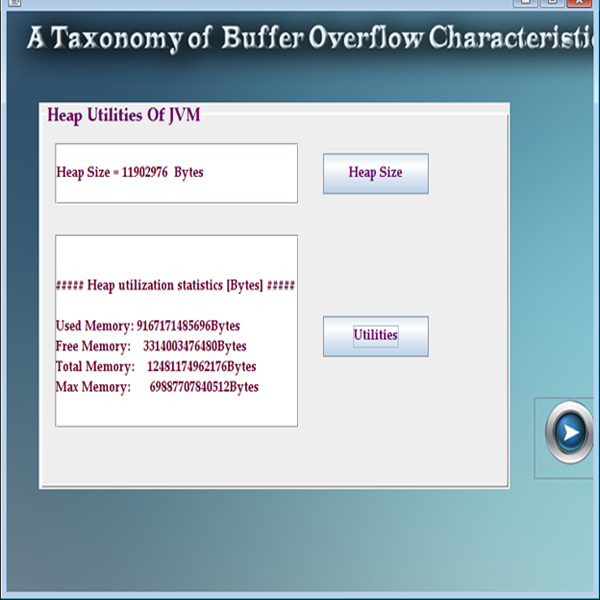
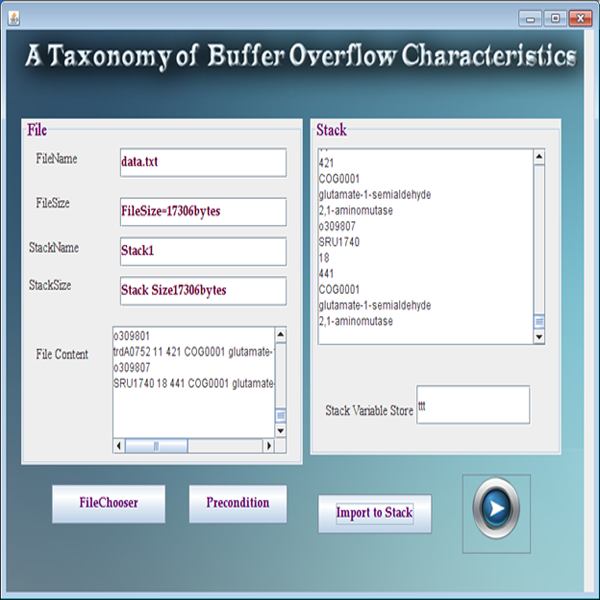
Thus the work flow mainly focuses to the buffer overflow. In which the data exceeding the bounds of an array. Depends on the buffer overflow , the system comes to the insecure state. For the insecure state, we develops the taxonomy of buffer exploitation control. Analyze both software and hardware measuring to validate this approach. Buffer overflows occur when a sequence of bytes of length n is placed into an array, or buffer, of length less than n. This simple error is all too common. In this paper, we focus on the buffer overflows that cause security problems. Significant work on vulnerabilities focuses on buffer overflows, in which data exceeding the bounds of an array is loaded into the array. The loading continues past the array boundary, causing variables and state information located adjacent to the array to change. As the process is not programmed to check for these additional changes, the process acts incorrectly. The incorrect action often places the system in a no secure state. This work develops a taxonomy of buffer overflow vulnerabilities based upon characteristics, or preconditions that must hold for an exploitable buffer overflow to exist. We analyze several software and hardware countermeasures to validate the approach. We then discuss alternate approaches to ameliorating this vulnerability. illuminating key characteristics of the buffer overflow problem, as well as the principles underlying our classification scheme. We present our classification of buffer overflows and analyzes it. We then examine proposed solutions in light of our classification. We conclude with some thoughts on future directions for the analysis and remediation (or elimination) of buffer overflow vulnerabilities.
Tags: 2012, Java, Security Projects